Back to News
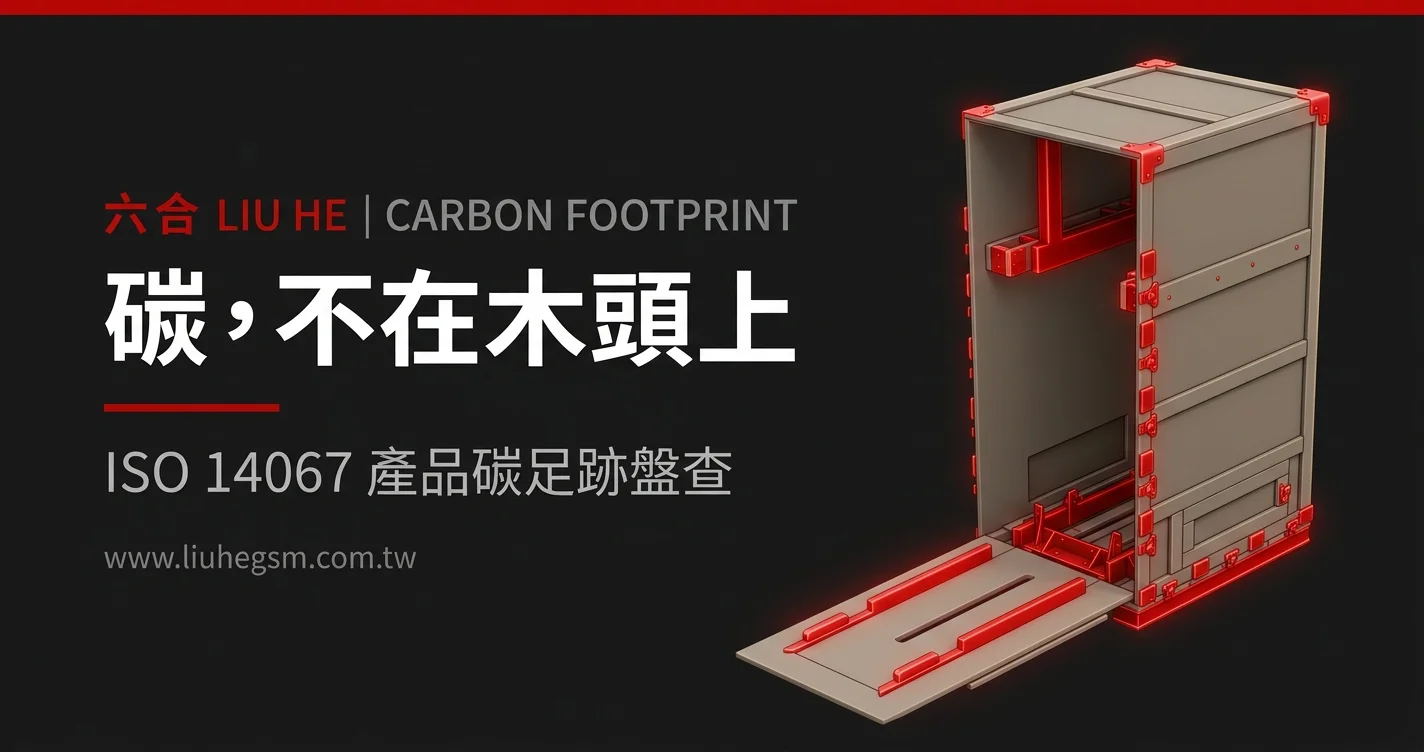
Nine-Tenths of an AI Server Crate's Carbon Footprint Is Not in the Wood
Ask anyone where the carbon in a wooden crate comes from,
and the answer is usually the wood.
After completing a product carbon footprint assessment
for its AI server export crates, LIU HE found otherwise.
Timber accounts for only about 9%.
More than 60% comes from metal structural components.
The assessment was verified to ISO 14067 and calculated
from a full year of actual production data.
【The Carbon Is in the Steel, Not the Timber】
The assessment broke the crate down into more than forty
individual components. The result:
Metal components approx. 63%
Timber approx. 9%
Cushioning (EPE) approx. 3%
Manufacturing (electricity, fuel, waste) approx. 24%
Within the metal components, one item alone accounts for
more than half of the entire footprint: the galvanised
structural panels and fixtures that carry the weight of the rack.
The result is not surprising, only counter-intuitive.
Server racks are heavy with a high centre of gravity,
so the crate must rely on metal components to bear load and secure the equipment.
Galvanised steel is an order of magnitude more carbon-intensive than timber.
A wooden crate is called wooden because of what it looks like.
Its carbon is in the steel.
【The Lever Is on the Drawing, Not the Production Line】
Metal components account for over 60% of emissions,
and their specification, quantity and configuration
are all determined during 3D modelling.
How many galvanised panels a crate needs, what thickness,
how the fixing points are arranged, which members carry the load:
the moment those decisions are made,
the crate's carbon footprint is effectively fixed.
After that, no matter how efficient the production line
or how sustainable the timber, only a small remainder is still adjustable.
This is the most practical use of the assessment.
It moves decarbonisation from effort on the factory floor
back to decisions on the drawing.
LIU HE's 3D packaging structure design already evaluates
load distribution, fixing point placement and working clearance.
The same model now also shows where the carbon sits.
【Why This Number Matters】
Supply chain carbon requirements from international brands
are being passed down tier by tier.
Server manufacturers are required to report,
and that reporting covers purchased goods and services.
Export crating is included.
In other words, the carbon footprint of a crate
is not only LIU HE's number.
It is also a line on the customer's own reporting sheet.
And what can be measured can be reduced.
Before the assessment, no one knew where the carbon was concentrated.
Including us.
【LIU HE Certifications】
ISO 9001 Quality Management System
ISO 14064-1 Organisational Greenhouse Gas Inventory
ISO 14067 Product Carbon Footprint
For crate carbon footprint data to support your supply chain reporting,
or to evaluate material configuration at the design stage,
contact us: +886 3-321-6766 / info@liuhegsm.com